
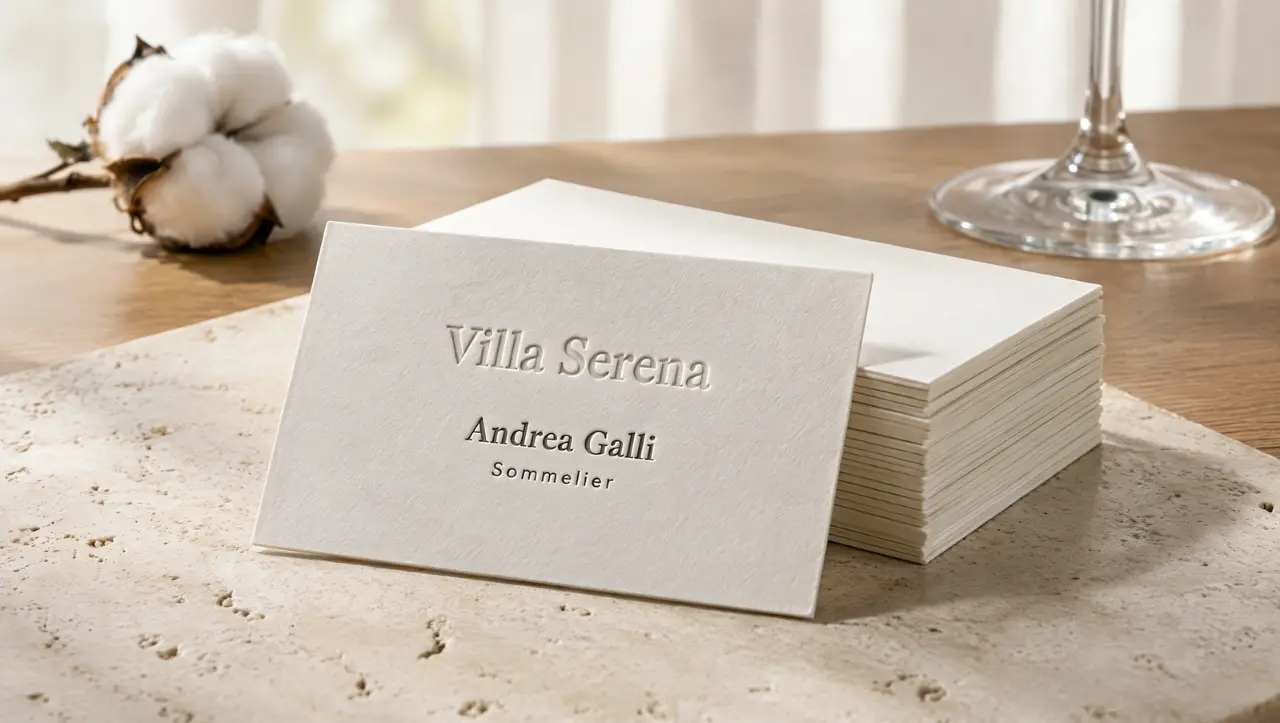
Photos are for illustration only. The product you request will be quoted and produced according to the specifications you provide.
We are selecting printers for this product. You can still send your request: as soon as a supplier joins we send it to them and you receive the quotes. Meanwhile we look for one.
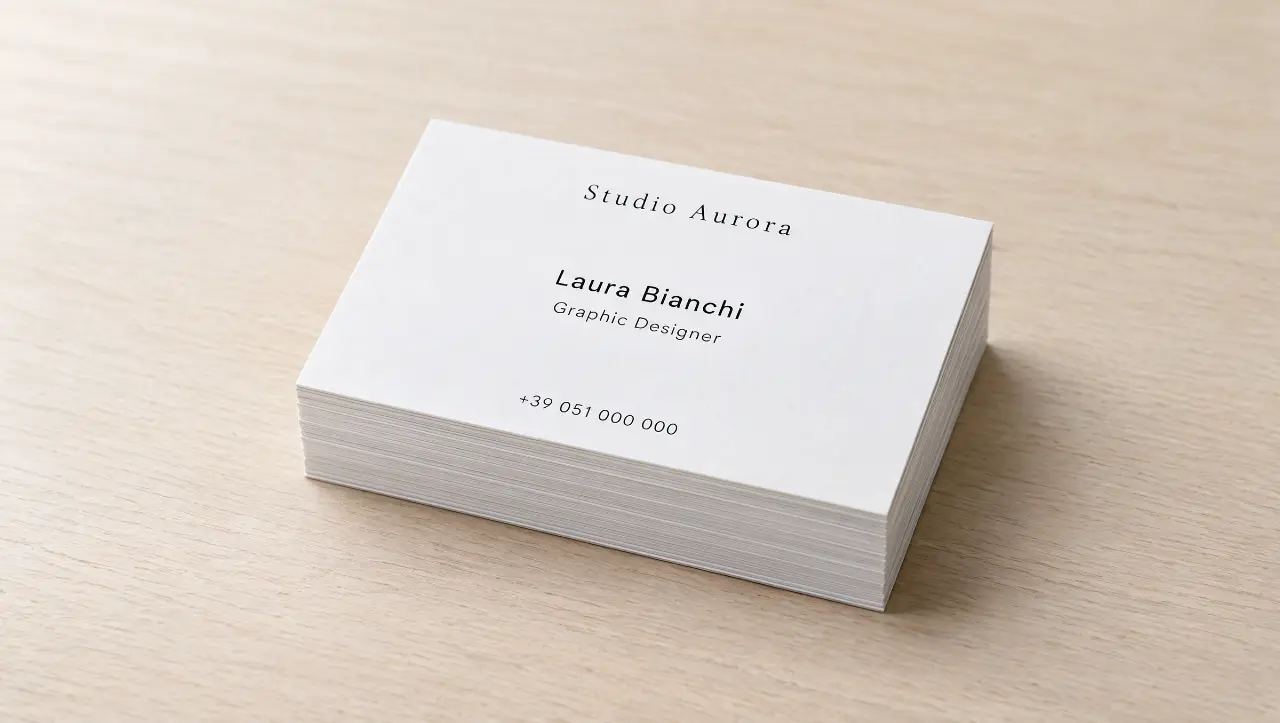
Premium-paper business cards focus on the quality of the raw material: natural, hammered, laid, cotton or through-dyed papers. The paper itself conveys style and care, without the need for lamination.
- Typical sizes: 85×55 mm, 90×50 mm
- Papers: cotton, laid, hammered, felt-marked, through-dyed
- Weights: 300–700 g/m², also duplexed
- Printing: offset, digital, letterpress
- Look: natural, tactile, unlaminated
Free for buyers: receive quotes from printers and make your own choice.
Sizes, materials and finishes
| Sizes | 85×55 mm, 90×50 mm, 85×85 mm, custom sizes |
|---|---|
| Papers and materials | Cotton papers 300–600 g/m², laid, hammered and felt-marked papers, premium recycled papers, through-dyed papers; duplexed up to 1,000 g/m² |
| Printing | Offset in four-colour process or Pantone, digital on compatible papers, letterpress for an impressed effect |
| Finishes | Blind embossing, hot foil stamping, coloured edges, rounded corners |
| Quantity | Generally from 100 to 2,000 cards per name |
When to choose it
- Professional and design studios
- Quality wine and food producers
- Artisans, ateliers and workshops
- Brands with a sustainable or natural positioning
Tips for your request
- Natural papers absorb more ink: avoid very dark solid backgrounds and very small reversed-out text.
- For letterpress, use vector artwork in flat spot colours, with lines no thinner than 0.25 pt.
- If possible, ask for a paper sample: colour and surface have a strong influence on how images reproduce.
Frequently asked questions
How do they differ from special-finish business cards?
Here the value lies in the paper, which remains natural and unlaminated; with special-finish cards the effect comes mainly from the embellishments applied on top.
Can white be printed on coloured papers?
White is achieved with foil, screen printing or digital presses equipped with white toner; with traditional offset, white is not opaque.
What is letterpress printing?
It is relief printing with a plate that presses the design into the paper, creating a debossed effect that is much appreciated on thick cotton papers.